Solar ROI in 2026: Navigating New Regulations and Quotas for Smarter Investments
06 January 2026
In 2026, the dream of harnessing the sun's power for your home or business is more appealing than ever. Solar PV systems offer a compelling blend of environmental stewardship and long-term financial savings. However, the landscape for solar investment is evolving. New regulations, particularly around grid integration and quota systems, are reshaping the Return on Investment (ROI) calculation. This article will help you understand these changes and navigate them for a smarter, more profitable solar journey.
The Shifting Sands of Solar Economics
For years, the formula for solar ROI was relatively straightforward: install panels, reduce your electricity bill, and enjoy the savings. Today, while the core benefits remain, several factors have introduced new layers of complexity:
- Grid Stability Concerns & Quotas: As solar adoption surged, utility companies faced challenges in managing grid stability due to intermittent solar generation. This has led to the introduction of connection quotas in many regions. These quotas limit the amount of solar capacity that can be connected to the grid in specific areas or during certain periods. This means simply wanting solar might not be enough; you need to secure a slot.
- Evolving Net Metering Policies: The "net metering" concept, where excess electricity exported to the grid offsets future consumption at the full retail rate, is being revised globally. Many regions are shifting towards Export-Import (Exim) systems or lower compensation rates for exported power. This significantly impacts how quickly you recoup your investment.
- Cost Fluctuations: While the long-term trend for solar panel costs is downward, local installation costs can vary due to labor, permitting, and specific equipment requirements. As of 2026, installation costs generally hover around Rp 12 – 18 million per kWp (or equivalent in other currencies) for residential and small commercial systems.
Understanding Your 2026 ROI Calculation
To calculate your ROI effectively, consider these key components:
- Initial Investment: This includes the cost of panels, inverters, mounting structures, installation labor, permitting fees, and any necessary grid connection upgrades.
- Electricity Bill Savings: This is the primary driver of ROI. Calculate the amount of electricity your system will generate and multiply it by your current electricity tariff.
- Export Revenue (if applicable): If your region still offers net metering or a favorable export tariff, factor in the monetary value of the excess electricity you sell back to the grid.
- Maintenance Costs: Solar PV systems are low-maintenance but not maintenance-free. Budget for occasional cleaning, inverter checks, and potential repairs.
- Government Incentives/Rebates: Don't forget any federal, provincial, or local incentives, tax credits, or subsidies that can significantly reduce your upfront cost.
- The Break-Even Point: This is the time it takes for your cumulative savings and earnings to equal your initial investment. In 2026, with the new variables, the break-even point can range from 4-8 years for well-optimized systems, depending on your location and specific circumstances.
Navigating the New Landscape: Smart Strategies
To maximize your solar ROI in 2026, a proactive and informed approach is crucial:
- Check Quota Availability First: Before committing to any major investment, inquire about grid connection quotas from your local utility provider (e.g., through platforms like PLN Mobile or equivalent apps in your region). Secure your capacity early.
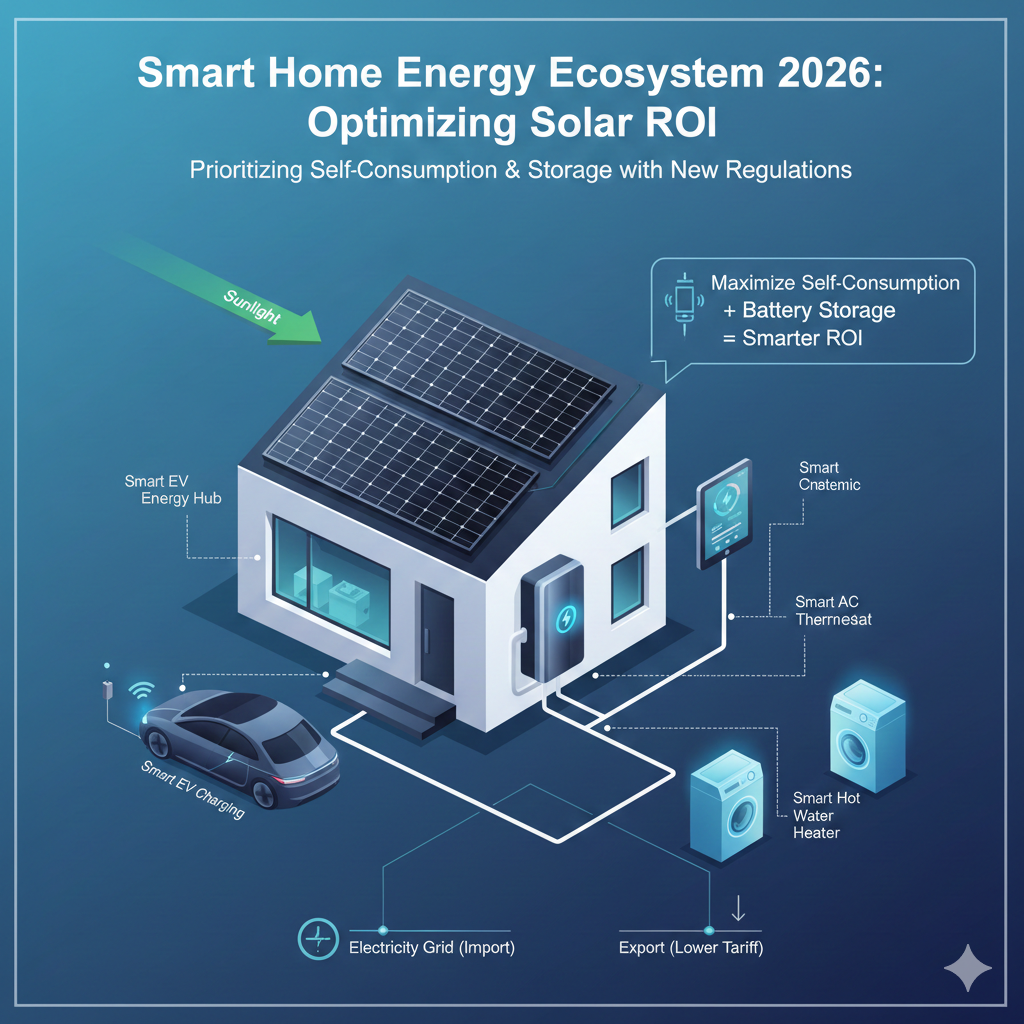
- Prioritize Self-Consumption: With less favorable export tariffs, the most valuable electricity is the one you consume directly. Design your system to match your consumption patterns.
- Energy Storage (Batteries): Consider integrating battery storage to store excess daytime solar energy for use during peak evening hours, further reducing reliance on grid power. This is particularly crucial where export tariffs are low.
- Smart Home Integration: Use smart appliances and energy management systems to automatically shift high-consumption activities (like washing dishes or charging EVs) to periods of high solar production.